Red Light Jumping Fine in India: Penalty Amount, CCTV Detection and How E-Challans Are Issued
10 June, 2026
Running a red light is one of the most common traffic violations in India and one of the most dangerous. At urban junctions with high pedestrian and cross-traffic movement, a red light violation creates the risk of a serious collision. The red light fine India system attempts to address this through substantial penalties and increasingly automated detection. Where a police officer once had to be physically present to catch and penalise a red light jumper, CCTV cameras and ANPR systems at major junctions across the country now do this automatically.
This guide covers the exact red light fine India amounts, how detection works, how an e-challan is generated without any officer being present, whether the fine varies by state, and what to do if you receive a wrong challan.
Red Light Fine India: The Penalty Amount and How It Works
The red light fine India amount under the Motor Vehicles (Amendment) Act, 2019 is:
- First offence: Rs 1,000 to Rs 5,000
- Repeat offence: Rs 10,000
The wide range for a first offence (Rs 1,000 to Rs 5,000) reflects the discretion given to traffic police and courts. What is fine for jumping red light in India most commonly is Rs 1,000 for a standard camera-generated challan. For violations judged more dangerous, such as crossing a red light at high speed or blocking an emergency vehicle, the signal jumping fine India can be set higher. What is fine for jumping red light in India for aggravated cases can therefore reach Rs 5,000 at the issuing authority's discretion.
The jumping red light penalty of Rs 10,000 for a repeat offence is a significant escalation and is intended to target habitual red light jumpers who have already been caught once. This amount is applied when the system identifies that the same vehicle has been issued a red light violation fine previously and has committed the violation again.
The red light challan amount of Rs 1,000 for a standard first-time camera-generated violation is the figure most drivers encounter, and it is issued automatically in cities with CCTV-based enforcement without any interaction with a police officer.
How CCTV and ANPR Detect Red Light Violations Automatically
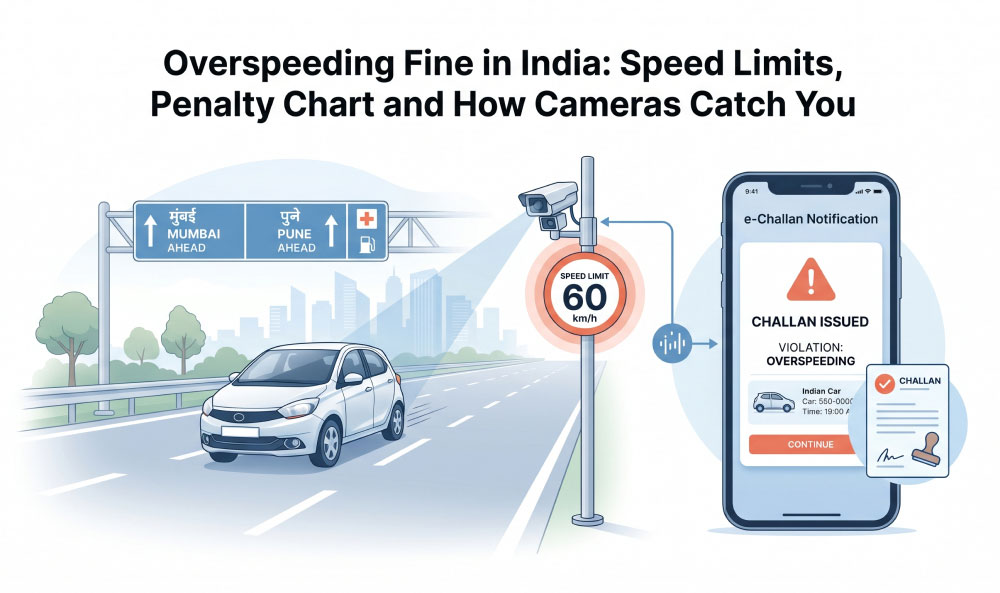
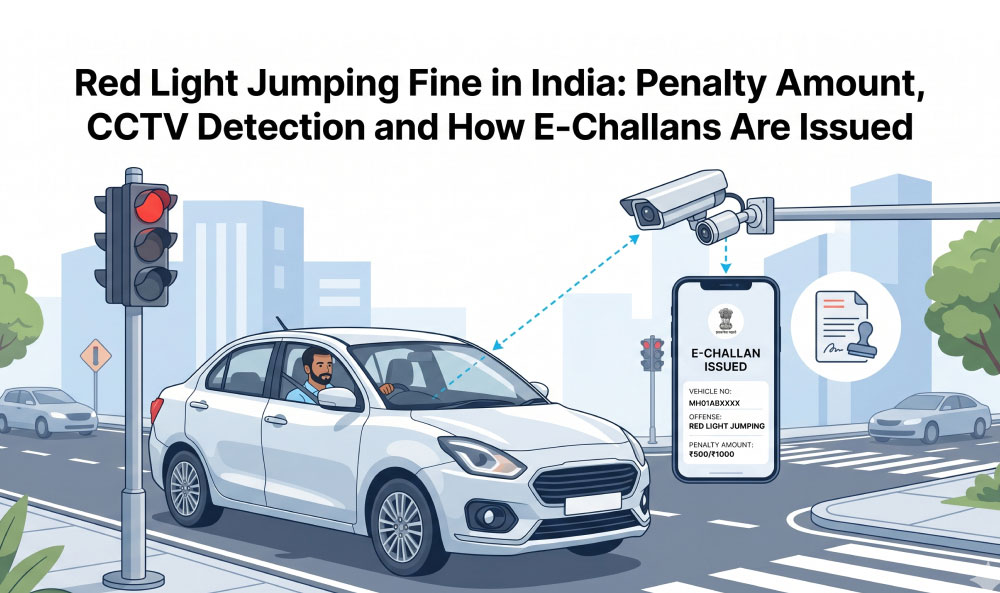
CCTV red light detection works by positioning cameras at traffic signal junctions with a clear view of the stop line and the intersection ahead. When the light turns red and a vehicle crosses the stop line, the camera captures one or more images showing the vehicle in the intersection during a red signal.
ANPR red light detection takes this a step further. The Automatic Number Plate Recognition system reads the number plate from the camera image and automatically matches it to the vehicle's registration record in the transport database. This means the red light violation fine is associated with the vehicle owner's registered mobile number, and an SMS notification is sent within 24 to 72 hours of the violation.
The combination of CCTV red light detection and ANPR technology means that in cities with this infrastructure, running a red light is captured and processed without any human intervention at the point of enforcement. The officer's role shifts from catching the violation to reviewing and confirming the challan, which happens digitally.
Major cities with extensive CCTV red light detection networks include Delhi, Mumbai, Bengaluru, Hyderabad, Chennai, Kolkata, Lucknow, and Pune. The density of camera coverage varies across these cities, with central and high-traffic areas having near-complete coverage and outer areas relying more on officer-based enforcement.
How a Red Light E-Challan Is Generated: The Step-by-Step Process
Questioning how are red light challans issued? You should, as it helps you verify that any challan you receive is legitimate. Here is the process from violation to challan delivery:
Step 1: The camera detects a vehicle crossing the stop line during a red signal. The image is time-stamped with the signal phase data to confirm the light was red at the moment of crossing.
Step 2: The ANPR system reads the number plate from the image. In cases where the plate is partially obscured or damaged, the image may be reviewed manually by a traffic enforcement officer before a challan is issued.
Step 3: The system cross-references the number plate with the RTO vehicle registration database to identify the owner's name and registered mobile number.
Step 4: A red light challan is created in the Parivahan e-challan system and linked to the vehicle's registration number. An SMS is sent to the registered mobile number.
Step 5: The challan appears on echallan.parivahan.gov.in within 24 to 72 hours and can be paid online through the portal, the Vehicle Info platform or UPI apps.
State-wise Red Light Fine: Is the Amount the Same Everywhere?
The red light fine state-wise structure across India is largely uniform, since the Motor Vehicles Act sets the national minimum. The red light fine India amounts of Rs 1,000 to Rs 5,000 for a first offence and Rs 10,000 for repeat offences apply in all states. No state imposes a lower fine than the national schedule, and most enforce exactly the central rate.
The red light fine state-wise variation that does exist relates to enforcement intensity and camera coverage rather than fine amounts. Delhi enforces red light violations most aggressively in terms of volume, followed by Bengaluru, Mumbai, and Chennai. States with less camera infrastructure rely more on officer-based enforcement, which generates fewer challans per day but carries the same signal jumping fine India amounts.
The practical consequence of state-wise variation is that the probability of receiving a red light challan for the same violation differs significantly by city, even though the red light violation fine amount is consistent nationally.
What to Do If You Received a Wrong Red Light Challan
Cameras can occasionally misread number plates, capture adjacent vehicles rather than the actual violator, or generate challans due to synchronisation errors between the signal phase data and the camera image. If you believe your red light fine India challan was issued incorrectly, here is the process:
Verify first: Log in to echallan.parivahan.gov.in and check the challan image if it is available. Many states now provide the camera image as part of the challan record, allowing you to confirm whether your vehicle is actually in the image.
File a grievance: Use the Parivahan grievance section or your state traffic police portal to submit a formal dispute. Describe the error specifically, whether it is a wrong number plate, wrong vehicle, or a synchronisation issue.
Request evidence via RTI: If the portal grievance does not resolve the matter, file an RTI application requesting the original camera image and signal phase log used to generate the jumping red light penalty.
For standard outstanding red light challans that are valid, the fastest payment route is through Vehicle Info. Enter your vehicle number, see all pending challans including red light violations, and pay directly using UPI, card, or net banking.
FAQs
1. What is the red light jumping fine in India?
Ans: The red light fine India amount is Rs 1,000 to Rs 5,000 for a first offence and Rs 10,000 for a repeat offence under the Motor Vehicles (Amendment) Act, 2019. Most camera-generated challans are issued at Rs 1,000 for a standard first violation. What is fine for jumping red light in India for more serious cases, such as high-speed crossings near pedestrian zones, can reach Rs 5,000 at the officer's or court's discretion.
2. How are red light challans issued in India?
Ans: The process now operates automatically in most major cities. CCTV cameras capture an image of the vehicle crossing the stop line during a red signal. ANPR technology reads the number plate and links it to the owner's registered mobile number. The red light challan is created in the Parivahan system and delivered via SMS within 24 to 72 hours without any officer interaction at the junction.
3. Is the red light fine the same in every state?
Ans: Yes, the red light fine state-wise structure follows the national MV Act schedule of Rs 1,000 to Rs 5,000 for a first offence. No state imposes a lower fine. The red light violation fine amount is consistent across Delhi, Mumbai, Bengaluru, Chennai, Kolkata, and all other states. What varies is enforcement intensity: cities with more CCTV red light detection infrastructure generate higher volumes of challans than those relying on officer patrols.
4. How does CCTV detect red light violations?
Ans: CCTV red light detection works by positioning cameras with a clear view of the stop line at signalised junctions. When a vehicle crosses the line during a red phase, the camera captures time-stamped images. ANPR red light technology then reads the number plate from the image and automatically creates a signal jumping fine India challan in the Parivahan system. The entire process requires no police officer to be present at the junction.
5. What is the penalty for a repeat red light violation?
Ans: The jumping red light penalty for a repeat offence is Rs 10,000 under the Motor Vehicles Act. The system identifies repeat violators by linking challans to the vehicle's registration number. If the same vehicle has a prior red light challan on record and commits the violation again, the repeat offence amount of Rs 10,000 applies automatically. The red light challan amount for repeat violations is ten times higher than a standard first-time camera challan.